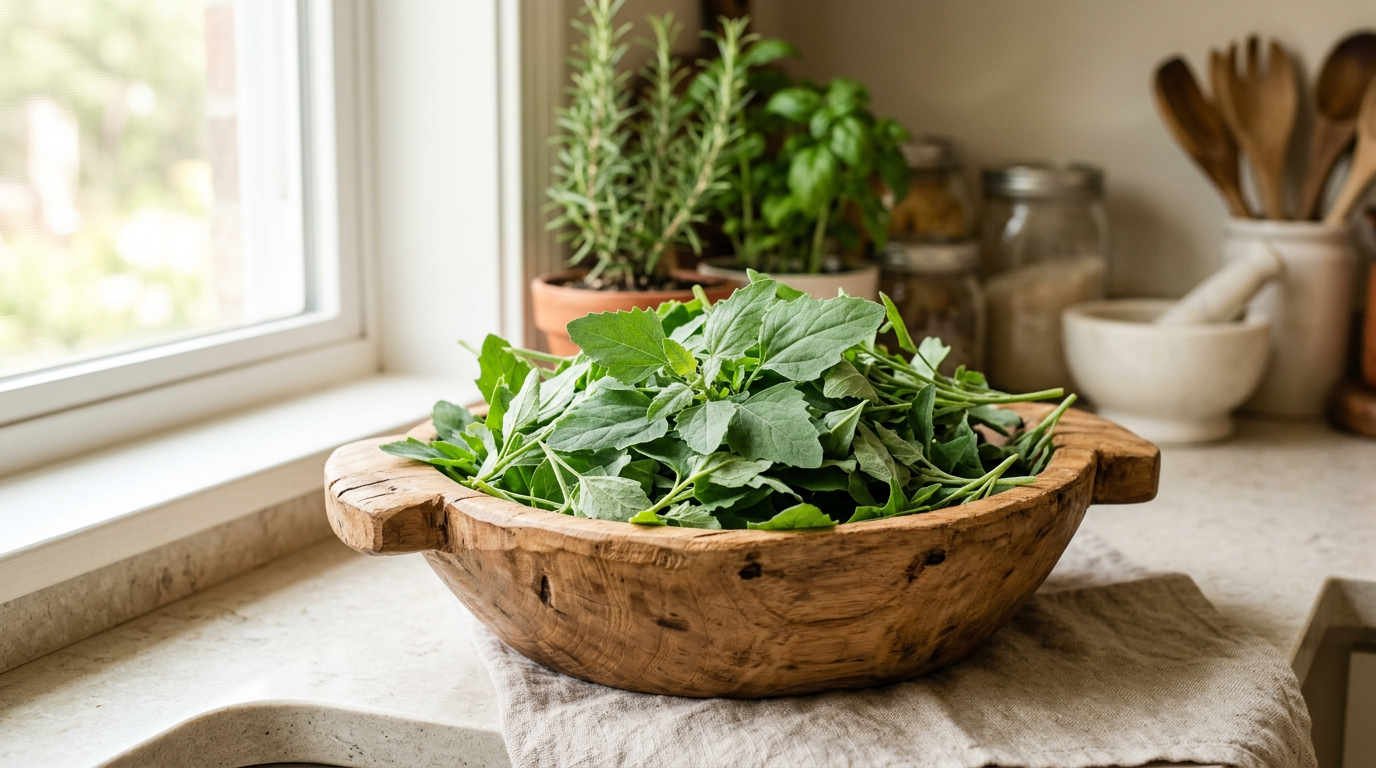
Lamb's Quarters Nutrition Facts
There's a reason foragers call it "wild spinach" — lamb's quarters (Chenopodium album) delivers a nutritional profile that rivals or surpasses cultivated spinach in several key nutrients. Here's the complete breakdown.
Nutritional Profile (per 100g raw leaves)
Lamb's Quarters vs. Spinach vs. Kale
How does lamb's quarters stack up against the two most popular cultivated greens? Per 100g of raw leaves:
| Nutrient | Lamb's Quarters | Spinach | Kale |
|---|---|---|---|
| Calories | 43 kcal | 23 kcal | 35 kcal |
| Protein | 4.2 g | 2.9 g | 2.9 g |
| Fiber | 4.0 g | 2.2 g | 4.1 g |
| Vitamin K | 773 µg (965%) | 483 µg (604%) | 389 µg (486%) |
| Vitamin C | 80 mg (89%) | 28 mg (31%) | 93 mg (103%) |
| Vitamin A | 580 µg (64%) | 469 µg (52%) | 241 µg (27%) |
| Calcium | 309 mg (24%) | 99 mg (8%) | 254 mg (20%) |
| Iron | 1.2 mg (7%) | 2.7 mg (15%) | 1.6 mg (9%) |
| Magnesium | 34 mg (8%) | 79 mg (19%) | 33 mg (8%) |
Lamb's quarters wins decisively in vitamin K, vitamin A, protein, and calcium, while kale leads in vitamin C and spinach in iron and magnesium. All three are excellent greens — but the fact that lamb's quarters grows free in your garden gives it an unbeatable value proposition.
Oxalic Acid & Safety Considerations
Oxalates bind to calcium and can contribute to kidney stone formation in susceptible individuals. For most people, moderate consumption is perfectly safe. Cooking significantly reduces oxalate levels — a 60-second blanch can reduce oxalates by 30–50%. Those with a history of calcium-oxalate kidney stones should limit raw consumption and favor cooked preparations.
Health Benefits
- Bone health: The extraordinary vitamin K content (965% DV per 100g) supports calcium metabolism and bone mineralization
- Immune support: High vitamin C (89% DV) supports immune function, collagen production, and iron absorption
- Eye & skin health: Rich vitamin A (64% DV) supports vision, skin integrity, and immune function
- Anti-inflammatory potential: The combination of vitamins, minerals, and plant compounds may help reduce inflammation
- Protein for a green: At 4.2g per 100g, lamb's quarters is among the highest-protein leafy greens — higher than spinach, kale, or lettuce
- Digestive health: 4g of fiber per 100g supports healthy digestion
Medicinal Uses (Traditional)
Lamb's quarters has a long history in traditional medicine systems across cultures:
- Poultice for skin: Crushed fresh leaves were traditionally applied as a poultice for burns, minor wounds, and skin inflammation
- Ayurvedic medicine: Known as "bathua" in South Asian traditions, it has been used to support digestion and as a general tonic
- Digestive support: Infusions (tea) from the leaves were used for stomach complaints and mild digestive issues
- Seeds as grain: Traditionally ground into flour and used as a protein-rich grain supplement, particularly during famine periods
Note: Traditional medicinal uses are included for historical context. Consult a healthcare professional for medical advice.
What Is Lamb's Quarters Used For?
Today, lamb's quarters serves multiple purposes: as a highly nutritious food source (its primary modern use), as livestock and poultry forage, in traditional medicine preparations, and even as a companion plant that attracts beneficial insects. For foragers, it's one of the most rewarding wild plants to learn — free, abundant, and genuinely good for you.
Frequently Asked Questions
Is lamb's quarters healthier than spinach?
In several key nutrients, yes. Lamb's quarters contains significantly more vitamin K (773 µg vs 483 µg per 100g), more vitamin C (80 mg vs 28 mg), comparable vitamin A, and notably more protein (4.2g vs 2.9g). It also has more calcium (309 mg vs 99 mg). Both are excellent greens, but lamb's quarters edges out spinach in many categories.
Can you eat lamb's quarters raw?
Yes, in moderation. Young, tender leaves are excellent in salads. However, like spinach, lamb's quarters contains oxalic acid (oxalates). Raw consumption in large quantities is not recommended, especially for people prone to kidney stones. Cooking (blanching, sautéing, steaming) significantly reduces oxalate levels and is the preferred preparation for larger servings.
Does cooking destroy the nutrients?
Cooking reduces some heat-sensitive nutrients like vitamin C (by roughly 30–50%), but it also makes other nutrients more bioavailable, reduces antinutrient oxalates, and allows you to eat larger quantities safely. A quick 60-second blanch is the best compromise — minimal nutrient loss with significant oxalate reduction. Fat-soluble vitamins like A and K are well-retained through cooking.